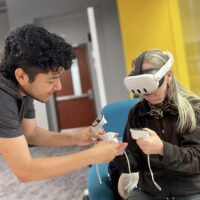
At the Meta Educator Community Summit, the conversation about scaling VR in education came paired with a clear glimpse of what’s next: AI and AR working together to expand how we live and learn.
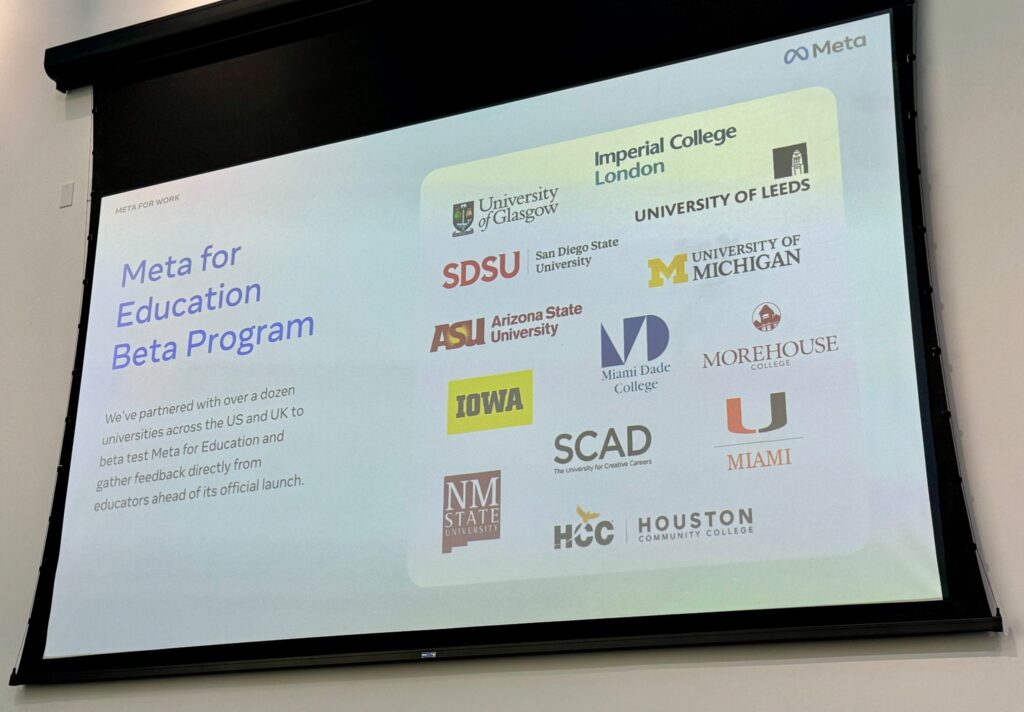
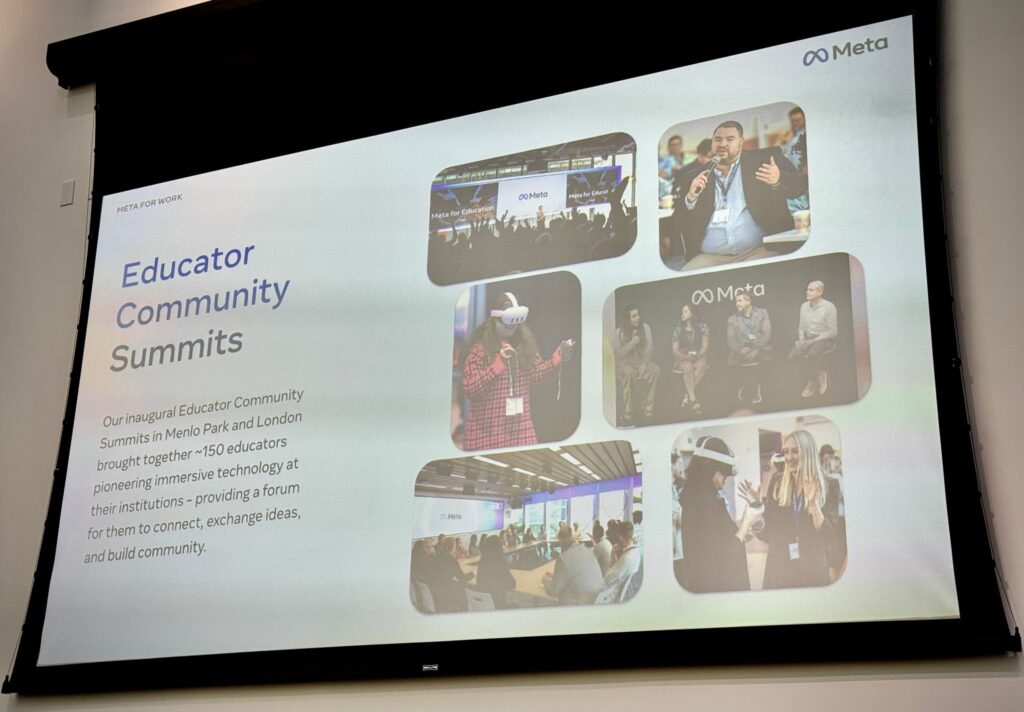
The summit is part of Meta for Education’s effort to build a community of educators pioneering immersive technology at their institutions. Its inaugural gatherings in Menlo Park and London brought together around 150 of them, and Arizona State University is one of the dozen-plus US and UK universities in the Meta for Education beta program, testing the platform and feeding back directly ahead of its official launch.


From screens to presence
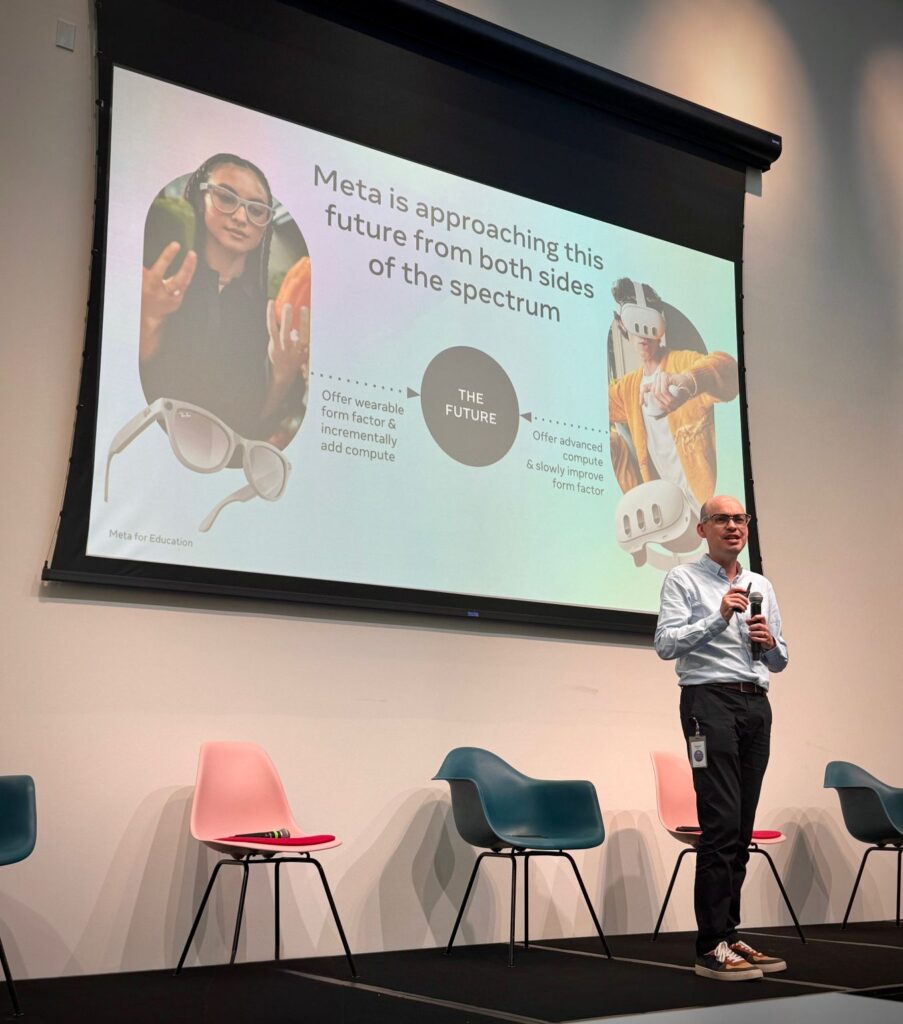
Matthew Sanders described how wearable AI is moving technology away from screens and toward presence. That shift is overdue: we check our phones around 144 times a day. Devices like smart glasses and EMG wristbands point to a future of more fluid interaction between people and their context, and with it an era of true spatial computing.
One framing stuck with me. Meta is approaching that future from both ends of the spectrum. From one side, glasses offer a wearable form factor and add compute incrementally. From the other, headsets offer advanced compute and slowly improve the form factor. Somewhere in the middle, the two meet.
What glasses could mean for learning
Meta’s Ray-Ban and display glasses hint at where this is heading: live translation, context-aware feedback, and shared visual experiences. Each of these could make learning far more accessible, meeting students in the moment rather than asking them to look down at a device.
At ASU Next Lab, we’re ready to begin. Our student teams are starting to explore the new Device Access Toolkit, bringing AI and AR together on these devices.
Building with and for educators
It was great to see Emilia Gracia, PhD, representing ASU’s Fluent Futures Lab on the panel “Building With & For Educators,” alongside Thomas Merrick and Dr. Lisa Milenkovic, moderated by Meta product manager Liz (Kraushar) Brady. The discussion kept coming back to a simple point: these tools work best when educators shape them, not just receive them.
Thank you
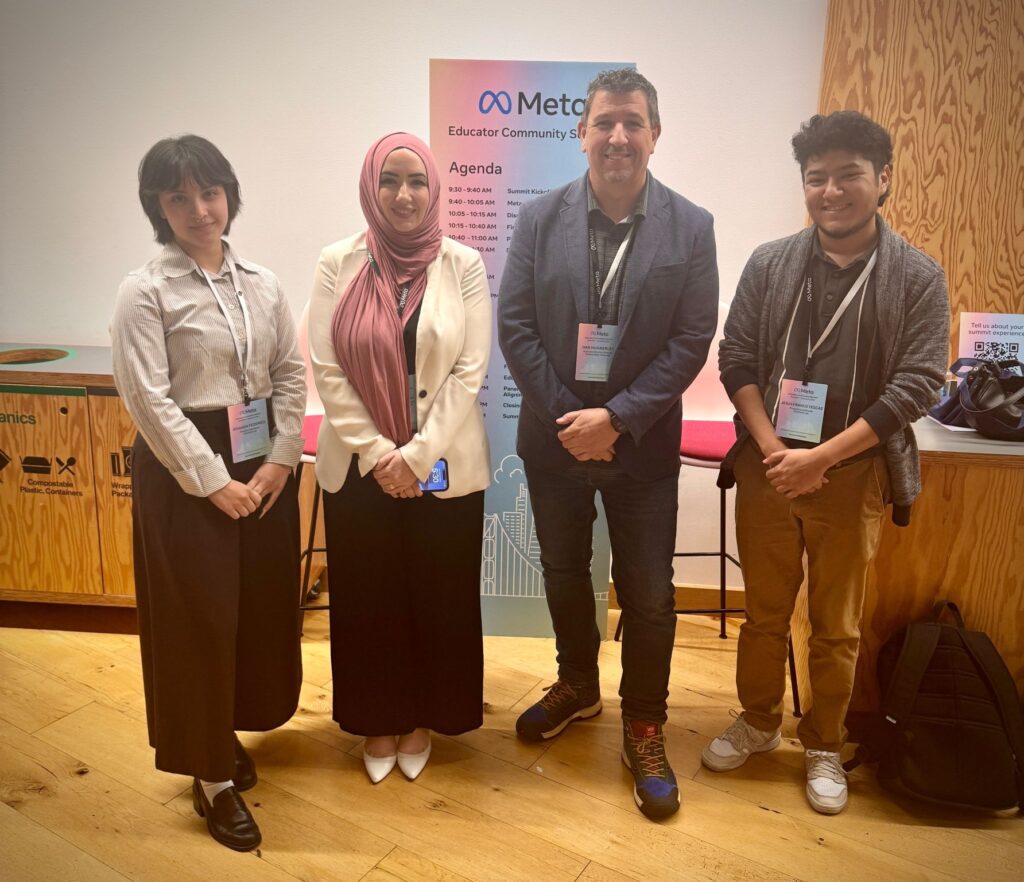
Congratulations to Amanda Federico and Jesus Franco Yescas, ASU alumni and our mighty program coordinators, for bringing Next Lab’s creative energy to the summit.
And thank you to Nicole Staubli, Darren Touch, Anirudh Kothari, David Hsu and the whole Meta team for hosting such a thoughtful, well-crafted event.